Best Dutch Oven for Bread: Size, Shape and Enamel vs Bare Iron
As an Amazon Associate, CrispyCounter earns from qualifying purchases. Research-based guide built from manufacturer and retailer specifications and well-established baking practice; not a hands-on test. Published Oct 30, 2026 (America/Chicago). No prices listed; check today’s price on Amazon.
5–6 qt sweet spot3 picks by budgetManufacturer specs, not hands-on tests
We may earn a commission when you buy through links on this page. Learn more
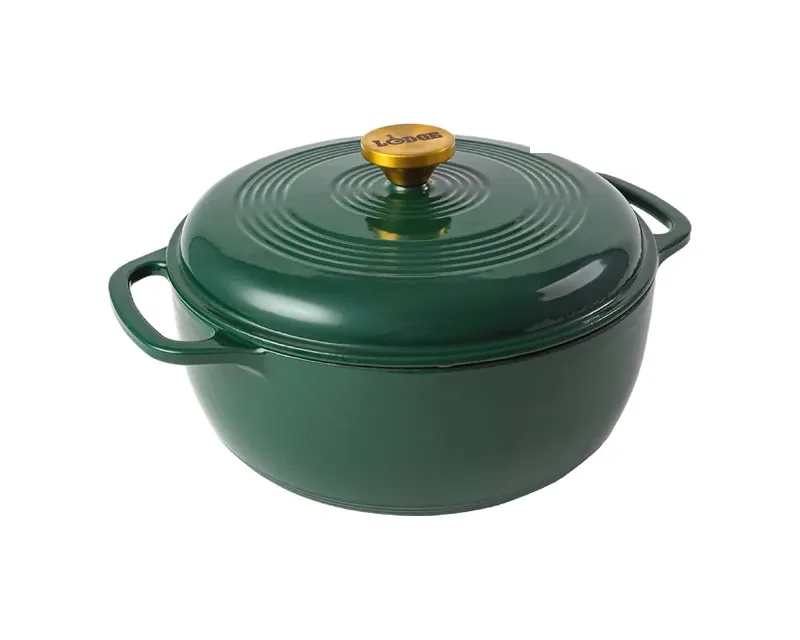
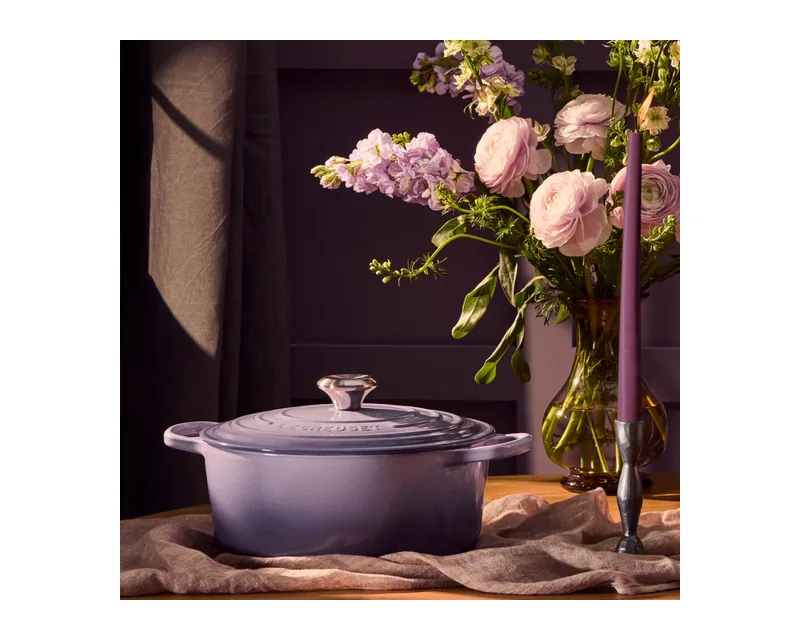
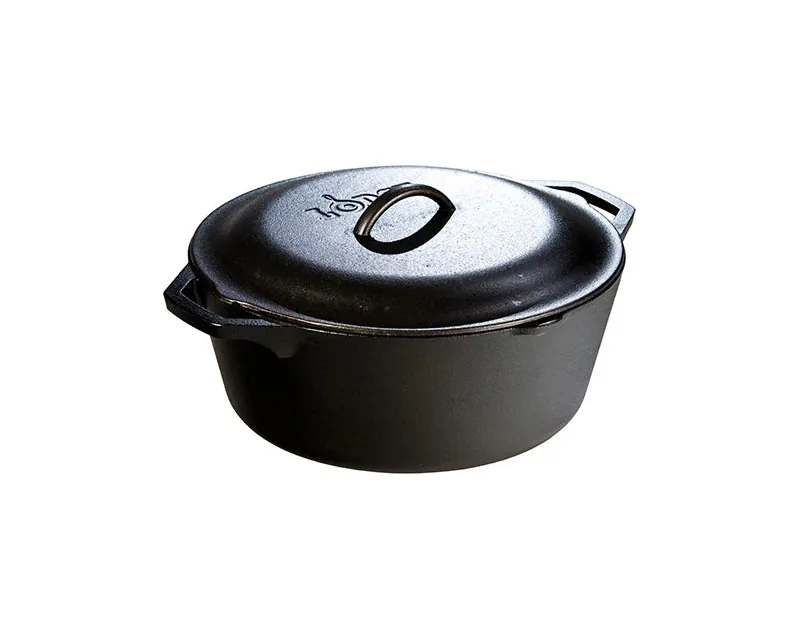
Short answer: for one standard home loaf, get a 5 to 6 quart round Dutch oven. The Lodge Essential Enamel 6 qt is our value pick, and the Le Creuset Signature 5.5 qt is the buy-once pick if it will also be your everyday braiser. If bread is the main job and you bake hot, a bare Lodge 5 qt cast-iron pot has no enamel or knob rating to work around.
Why a Dutch oven makes better home bread
A home oven vents moisture and heats unevenly, so bread baked on a sheet often sets its crust before it finishes rising. A preheated, covered Dutch oven fixes both. The heavy iron stores heat and transfers it into the dough, while the lid traps the steam coming off the loaf. That steam keeps the surface soft for the first part of the bake, so the loaf can expand (oven spring) before the crust hardens. You then take the lid off for the rest of the bake to brown and crisp the crust. Most Dutch-oven bread recipes bake hot, often around 450–500°F, which is why temperature ratings show up so often in this guide.
Loaf size to pot size
A rule-of-thumb chart, not lab data. Dough weight assumes a typical lean dough at roughly 70–75% hydration. What matters is about an inch of room around the shaped loaf and enough height for the dome.
Flour in recipe
Approx. dough weight
Round pot (boule)
Oval pot (batard)
Notes
~350 g
~600 g
3.5–4.5 qt
3.5–5 qt
Small loaf; a 5.5 qt works but the loaf may spread
~500 g (most recipes)
~850–900 g
5–6 qt
5–6.75 qt
The sweet spot for all three of our picks
~750 g
~1.3 kg
6.75–7.25 qt
6.75–8 qt
Heavy to lift hot; consider two smaller loaves
1 kg+
~1.75 kg+
7.25 qt+
8 qt+
Usually better split into two loaves
Quart size is only a proxy. What the loaf really cares about is floor diameter and interior height. A 5.5 qt Le Creuset Signature is a 26 cm size class with about 4.4 inches of interior depth, according to the maker’s size guide. Lodge lists the Essential Enamel 6 qt at about 10.9 inches upper outside diameter, and retailers list the bare Lodge 5 qt at about 10.25 inches across and about 4.5 inches deep. All three are comfortable for a ~500 g boule. For more on sizing for stews and families, see our Dutch oven size chart.
Loading, shape and the combo-cooker question
Diagram (not to scale): why loading is easier with a shallow base, and why a parchment sling helps with a deep pot.
The awkward part of Dutch-oven bread is getting soft dough into a pot at 450°F or more without burning a forearm or deflating the loaf. With a standard, deep pot, the usual fix is a parchment sling: shape and proof the loaf on parchment, then lower it in by the edges. A combo cooker is a bare cast-iron set with a shallow skillet-like piece and a deep pot that fit together. You flip it, so the dough goes onto the low piece and the deep piece goes over it as the lid. That makes loading and scoring easier. It is a bread-first tool, though: the shallow side is less useful for soups and braises. We do not currently list a combo cooker on CrispyCounter, so we are not linking one.
Round vs oval: round pots suit the boules most recipes describe and fit evenly on a home oven rack. Oval pots suit batards. You get more uniform slices for sandwiches, but you need to check the interior length.
Buying criteria for a bread Dutch oven
Temperature rating, including the knob. This is the bread-specific criterion that general Dutch-oven reviews skip. Lodge rates the Essential Enamel line oven-safe to 500°F and fits it with a stainless knob. Le Creuset rates Signature pots and the current black composite knob to 500°F, while its older “classic” phenolic knob is rated to 390°F. Bare cast iron like the Lodge 5 qt has no enamel or plastic parts to limit it.
Floor diameter and height. Aim for about an inch of clearance around the shaped loaf, and enough height for the loaf to rise without touching the lid.
Weight when hot. You will be lifting a 450°F+ pot in and out of the oven. Manufacturer and retailer listings put the Lodge Essential Enamel 6 qt at about 13.5 lb, the bare Lodge 5 qt at about 11.6 lb, and Le Creuset’s size guide puts its 5.5 qt round at about 11.3 lb. That is before the bread.
Handles. Wide loop handles you can grip with thick oven mitts matter more than looks.
Interior finish. Light enamel shows browning and is easy to clean, but it can stain or darken over time with high-heat baking. That is cosmetic. Bare iron does not show stains but needs drying and an occasional thin oil coat; see how to season cast iron.
Everyday use. If the pot will also make chili, braises and tomato sauces, enamel’s no-seasoning, acid-friendly surface earns its keep. If it is only for bread, bare iron is the simpler tool.
Spec comparison: our three bread picks
From manufacturer and retailer specifications (not our measurements). Confirm the exact model and color on the listing.
Spec
Lodge Essential Enamel 6 qt
Le Creuset Signature 5.5 qt
Lodge 5 qt cast iron (L8DOL3)
Material
Enameled cast iron
Enameled cast iron
Bare, pre-seasoned cast iron
Shape
Round
Round
Round, loop handles
Size (listed)
~10.9 in upper outside dia.
26 cm size class; ~4.4 in interior depth
~10.25 in dia.; ~4.5 in deep (retailer)
Oven rating
Oven-safe to 500°F
Pot and composite knob to 500°F
No coating limit
Knob
Stainless steel
Black composite (500°F)
Cast-iron lid handle
Weight (listed)
~13.5 lb
~11.3 lb
~11.6 lb
Seasoning
None needed
None needed
Needs upkeep
Acidic stews
Fine
Fine
Avoid long tomato simmers
Tradeoffs
Enamel vs bare iron. Enamel is the better all-rounder: no seasoning, fine with tomatoes and wine, and it goes from stove to table. In exchange, you bake within a 500°F rating and avoid thermal shock. Bare iron is the better bread-only tool but asks for seasoning care.
Value vs heirloom. The Lodge Essential gives you the same basic physics (heavy iron plus a tight lid) for much less money. The Le Creuset is built and warrantied as a decades-long pot, and that matters most if you will also braise in it every week.
Deep pot vs combo cooker. A deep pot is the more versatile kitchen tool. A combo cooker is easier to load but less useful for anything soupy.
Preheated vs cold start. Most recipes preheat the pot for maximum oven spring. Some bakers start in a cold pot to avoid handling hot iron. It is a recipe choice, and either way, follow your pot’s care guide.
Which one should you get? Decision table
If you…
Get
Want one pot for bread and weeknight stews, on a budget
Lodge lists this 6 qt round as oven-safe to 500°F, with a stainless steel knob and loop handles, and calls out homemade bread as a use. Six quarts gives a ~500 g boule room to spring, and the enamel means it also handles chili and braises with no seasoning.
Best for: one pot for bread plus everyday stews
Tradeoff: the heaviest of the three, at about 13.5 lb listed
Le Creuset rates the Signature pot and its current black composite knob to 500°F. Its size guide lists the 5.5 qt round at about 4.4 inches of interior depth and about 11.3 lb, the lightest of our three. The light sand interior makes it easy to watch browning on braises.
Best for: bakers who will also braise in it every week
Tradeoff: the priciest; the light interior can discolor with frequent hot bakes
Skip if: bread is the only job, since bare iron does that for less
Bread-first budget pick: Lodge 5 qt cast iron (L8DOL3)
Bare, pre-seasoned cast iron with dual loop handles. Retailers list it at about 10.25 inches across and about 4.5 inches deep. There is no enamel to stain and no knob rating to watch, so it is the simplest pot for hot, frequent bread baking.
Best for: dedicated bread bakers who bake hot and often
Tradeoff: needs seasoning care; not ideal for long acidic simmers
Skip if: you want a stove-to-table stew pot with no upkeep
Good fit: anyone starting no-knead or sourdough bread at home, bakers whose loaves spread flat on a sheet pan, and cooks who want their bread pot to double as a stew pot.
Not for: sandwich-loaf bakers using loaf tins, people who already own any 5–7 qt oven-safe Dutch oven (check the knob rating and start baking), and anyone who can’t comfortably lift 11–14 lb of hot iron. A lighter steam setup on a baking stone may suit you better.
FAQ
What size Dutch oven do I need for sourdough or no-knead bread?
For a standard loaf made with about 500 g of flour, a 5 to 6 quart round Dutch oven is the common sweet spot. Smaller pots crowd the loaf; much larger ones let it spread and are heavier to handle hot.
Can I bake bread in an enameled Dutch oven at 500°F?
Within the manufacturer’s rating, yes. Lodge rates its Essential Enamel Dutch ovens oven-safe to 500°F, and Le Creuset rates its Signature pots and black composite knob to 500°F. Don’t go above the rating. Older Le Creuset “classic” black knobs are rated lower (390°F), so check before baking hot.
Round or oval Dutch oven for bread?
Round for a boule, which is what most recipes assume. Oval for a batard, the longer loaf that slices into more even sandwich pieces. An oval needs more length, so check the interior length against your loaf.
Do I need parchment paper?
It is not required, but a parchment sling makes it much easier to lower dough into a hot, deep pot without touching the walls, and it helps keep the enamel floor cleaner. Check that your parchment is rated for your baking temperature.
Is bare cast iron or enamel better for bread?
Both bake bread well, because the pot’s job is to hold heat and trap steam. Bare cast iron has no enamel to stain and no knob rating to worry about, but it needs seasoning upkeep. Enamel needs no seasoning and doubles as an everyday stew pot, but you work within its temperature rating.
Should I preheat the Dutch oven empty?
Most Dutch-oven bread recipes preheat the covered pot in the oven, and many bakers do. Read your pot’s care guide first: enamel makers warn against heating an empty pot on a stovetop burner and against prolonged high heat. Never put cold water into a hot enameled pot.